
Ben Morea: Behind the Black Mask
Artists Against the Art World - Memories of New York 1967

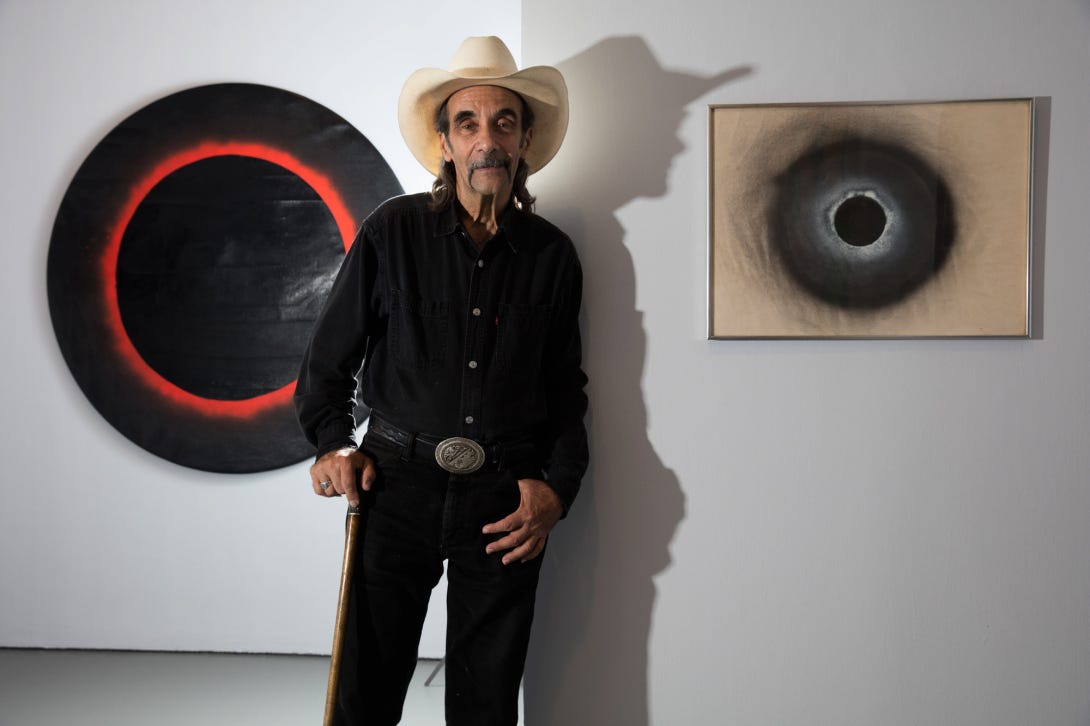
Ben Morea (1940-2026) died at his home in Colorado on 2nd May.
‘Ben was not simply an old revolutionary from another era, nor a nostalgic remnant of the American counterculture. He was one of those rare human beings who attempted to transform rebellion into a total form of life — to erase the borders between self and other, poetry and insurrection, art and survival, to bring global social revolution to the streets of the metropolis.’ - Crimethink
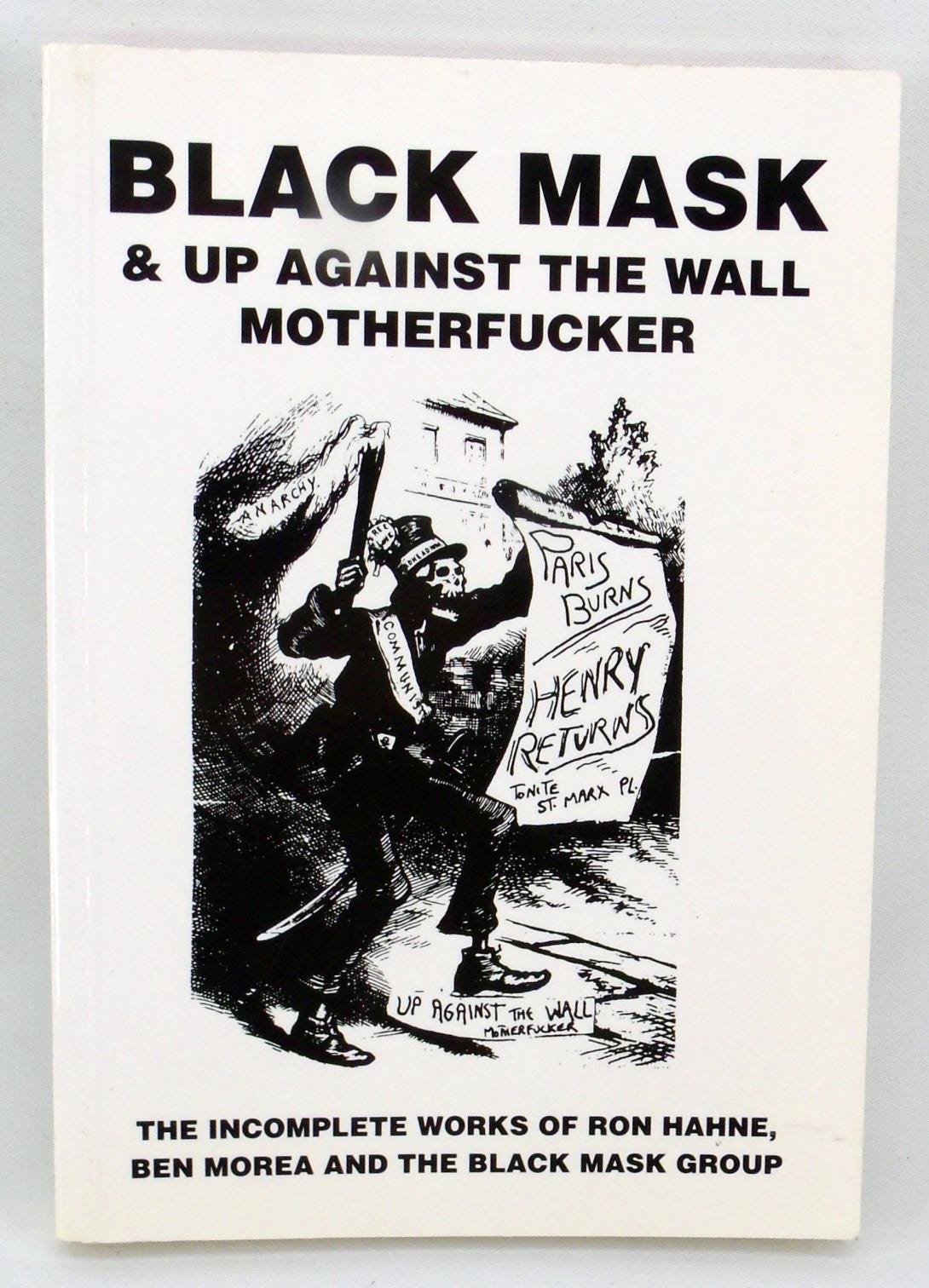
In the BPC book, King Mob: the Negation and Transcendence of Art, David and Stuart Wise recall their involvement with Morea’s Black Mask group.
In the mid-1960s the Wise twins, as students at Newcastle University School of Art, helped publish Icteric , a Surrealist-inspired magazine which called for ‘the fusion of art and life’. Icteric was the brainchild of Ronald Hunt, the librarian at the school’s Department of Fine Art. Hunt acquainted Donald Nicholson-Smith with the Paris journal, Internationale Situationniste (Nicholson-Smith went on to co-found the English Section of the Situationist International). Hunt also learned of the activities of Ben Morea and the Black Mask group in New York, such as their intervention at a meeting in a plush art gallery shouting, ‘burn the museums baby’, ‘art is dead’, ‘Museum closed’ etc. Hunt thought (rightly) that the Wises might find common cause with Black Mask. Dave Wise recalls ‘Soon letters were sent out to New York and we got replies immediately: “Brothers/sisters come and join us!”’
From Dave and Stuart Wise, King Mob: The Negation and Transcendence of Art: Malevich, Schwitters, Hirst, Banksy, Mayakovsky, Situationists, Tatlin, Fluxus, Black Mask, BPC.
So two of us (Dave Wise and Anne Ryder) went from Newcastle to New York via London, and in the summer of 1967 engaged in some of the activities of Black Mask... It proved to be an eye-opener and quite an experience, which changed our lives forever.
During the British General Strike of 1926, the bourgeoisie in Newcastle armed themselves against the workers more than in any other comparable city in the country. As we learnt to our cost, reaction always packed a punch in Newcastle and an air of suppressed violence was a constant feature of Newcastle life. So in a sense going to New York in 1967 was like home from home; and I can remember sitting on a side walk one unbearably hot summer night and being more or less unfazed by a youth who passed by, casually smashing windows to either side of us as he did so. Just like Newcastle I thought to myself.
Ben Morea was impressed by my relaxed attitude. I then explained to him something of the Newcastle area’s history. Yes, we fitted in just fine and dandy with Ron, Janice, Yvonne, Ben and co on the Lower East Side in New York. There was also a profound social connection. We instantly recognised each other as having come from the lower end of the shit heap. We were quite spontaneously maladjusted with nonetheless sufficient clued-in ‘middle class’ knowledge to get the authorities sufficiently disturbed whenever they were in our presence.
Looking back, Black Mask was, in many respects, more precise and rigorous than the Up Against the Wall Motherfuckers group they were associated with, as the latter tended to fall into super-militancy with a strong overlay of active mysticism as the hippie transformed itself into yippie. Yet many of the Black Mask interventions were indeed excellent. A leaflet from my time in New York in 1967 called Freedom is not a gift from Captain Fink was one of the best Black Mask flyers ever put out on the streets. It’s never been reproduced anywhere simply because it was lost and I only found it recently in a pile of mucky papers in my bedroom. (Actually most of the BM/Motherfucker material published in English came from similar piles in my London flat and not from New York - much to the amusement of some Americans). Fresh out of Newcastle, I actually had a small hand in composing the Captain Fink flyer while sitting around a big old wooden table in Ben’s very sparsely furnished, not to say austere, apartment on the Lower East Side. Captain Fink was the new top cop of the local precinct and in a way represented the changing face of policing in strife-torn America.
Fink opted for a more manipulative approach rather than deploy the usual heavy-handed tactics of shoot first and ask questions afterwards. It was this more sophisticated, controlling approach that the flyer condemned. All well and good but actually it was a different story when four or five of us handed the leaflet out in the streets. I remember attending a large Black Power meeting on the Lower East Side to listen to H. Rap Brown speaking inside a large building which was already full to overflowing. So many people had turned up that the streets around the building were jam packed mainly with Afro-Caribbeans, though there were a few palefaces amongst the throng. On the flat roofs of the surrounding high 19th century brownstone buildings there were occasional machine gun posts (courtesy of Captain Fink?) manned by police units, with the barrels of the machine guns pointing directly down into the crowds (remember this was just after the huge urban riots in Newark and Detroit).
With my heart in my mouth I started handing out the Captain Fink leaflet together with other Black Mask stuff. Suddenly two cops jumped me, one thrusting a gun in my ribs whilst the other shoved the barrel of his gun against my forehead. They seized what I was carrying and slyly pilfered personal belongings, though they stopped short of doing anything else. At the same moment another cop sidled up to Anne, who was wearing a mini-skirt (English mini-skirts were still much shorter than their American counterparts), kissing her full on the lips. Obviously I was shaken as previous run-ins with police in the north of England had been nothing like this. I was certain at the very least I’d be immediately deported back to England but the cops didn’t seem interested and perhaps assumed I was American. The personal humiliation was enough and once over with they laid off. The Black guys around me looked on quizzically and, if anything, were a wee bit flummoxed as if not knowing what to make of it all. Ben Morea though, had witnessed the whole incident and came running up just as the cops were moving on. He shook his head and said; ‘Dave, you shouldn’t have let them take the leaflets!’ It was then the difference between Newcastle and New York really struck home.
Our meeting with Black Mask in New York in 1967 was to have big repercussions vis-à-vis the last days of Icteric in Newcastle. Our encounter was to prove crucial in the break-up of the English section of the Situationist International. In New York, Ben Morea, having by then heard of the Situationists, gave us the personal addresses and telephone numbers of Situ sympathisers who resided in London. We duly contacted on them on our return to England. They were the people around the magazine Heatwave, some of whom initially formed the English section of the Situationist International. Heatwave was the first magazine of all to put the new revolt of youth into some kind of perspective, with specific reference to Mods and Rockers, Beats and the like; affirming their vandalistic acts of destruction as something which could have ‘real future consequences.’
Initially, what resulted was a ‘meeting - if you like – between north and south’: between the Wise twins and friends, and the English section of the Situationists, consisting of, Chris Gray, Donald Nicholson Smith, Tim (TJ) Clark and Charles Radcliffe. In this new grouping the ideas of the Situationists and their predecessors were discussed in depth, ...finding out by word of mouth - from the horse’s mouth if you like - all the unknown history of post-Second World War cultural and political subversion and how we could no longer separate the two as they inevitably tended more and more to enmesh.
At that time a magazine was being put together containing new, original polemical texts, most of which – due to ‘unforeseen circumstances’ - have unfortunately been lost as the proposed magazine never saw the light of day. We saved the only known one: The Revolution of Modern Art and the Modern Art of Revolution put together by Chris Gray and Don with occasional help from Tim Clark... In that text there are references to Black Mask couched in a comradely critical way.
And then came Raoul Vaneigem’s bombshell communication after his meeting with Black Mask in New York in late 1967. Principally, Vaneigem, a Belgian representing the Paris Situationists objected to Alan Hoffman, a kind of mystical but political acidhead who’d started to show an interest in Black Mask... Also, Ben Morea had a serious liver complaint and he couldn’t touch alcohol, thus acid went down very nicely... Ben was inevitably very upset about Vaneigem and started raving on in letters about the man-of-letters disposition Vaneigem put across, accusing him of not knowing anything about those at the bottom of the pile and street life in general.
This created quite a dilemma in London as Chris Gray and Don N Smith in particular wanted to keep all the newfound friendships here alive and kicking. Knowing our friendliness with Ben Morea, they didn’t want to cause too many upsets before things had really kicked in in terms of doing something together. Presumably because of their prevarication, they were excluded from the Situationists and the rest, as they say, is history...
Ben Morea has recently ‘returned’ to visiting New York on a regular basis from the wilds of New Mexico and now, after all these years of absence, writes a blog via E-Blast. Typically Ben, the style tends to the pert and epigrammatic, though perhaps too restricted to politics and not enough about society at large. On the other hand a recent interview explains just how acute his analysis of the late 1960s is. He calls one of us ‘a great guy’ (thanks but we don’t need it) having forgotten the name (DW) and in response we reckon he is still a ‘stand-up guy’ as the Americans say.
So what happened to Ben? (We were even asked the same question by sympathetic Yanks in the 1970s but we hadn’t a clue). It seems after the Motherfuckers, Ben and Janice spent a long-time in the wilderness of the American south-west living the life style of latter-day indigenous Americans (ye old Indians) avoiding police detection before Ben became a lumberjack and was somewhat invalided by a chainsaw accident. But the myths which arose once he’d disappeared from the rebel ‘spotlights’ went similarly wild ranging from horse breeder/trader to rich businessman. DW 2007

Thank you so much for posting this. When I spoke to Ben in a couple of months ago, he said that him and Raoul Vaneigem were planning to stage some kind of dialogue to return to the unfinished business of that time. So sad that never came to pass.
Thanks Ben Gidley. Wow, that 'unfinished' would have been something!