
An Exorcised Ghost Street
With a Taste of Terylene

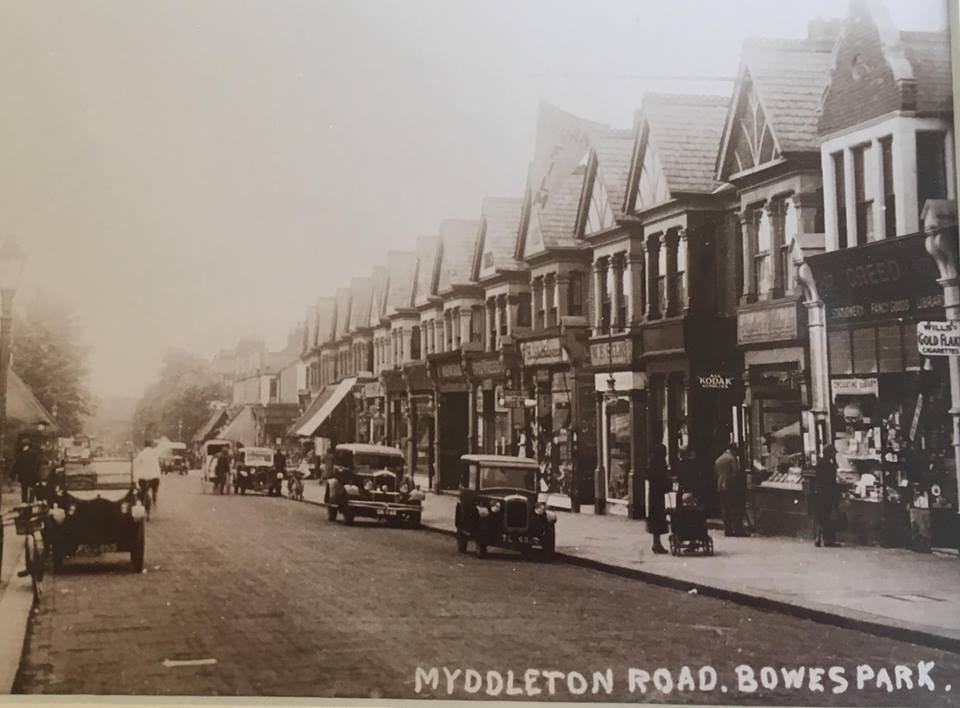
Bowes Park is an estate of Edwardian houses, politely described in a late 20th century London guide book as “an area of shabby gentility.” The high street, Myddleton Road, took its name from Thomas Myddleton (1550-1631), architect of the New River which flows across and under it. The New River was dug to follow the contour line from Hertfordshire and supply London with much-needed fresh water. In the 1850s the winding, snake-like river was straightened to speed up the flow.
When I re-located there (also in the late 20th century) it was evidently an area in decline. Apart from the usual high street shops - butcher, baker, chemist, newsagent, chip shop, Chinese takeway, etc - none of which made it into the 21st century, the most notable features of Myddleton Road, now also gone, were:
The Vrisaki restaurant, which served the best takeaway kebabs in north London. It closed (arguably) after the council introduced LTN (Low Traffic Neighbourhood) regulations which made access and parking difficult for customers.
The timber yard and the headquarters of the Furniture and Allied Trades union.
A branch of Lloyds Bank, which closed after an armed robbery, and pushed up insurance prices for the entire street to eye-watering rates. The building is now a day-nursery.
Henleys bar, a small Irish pub which hosted late-night lock-ins at weekends; its “Wild West” atmosphere heightened when the lights in the pub were switched off every time a police patrol car passed outside. It later reopened, renamed as The Step, an event venue and community pub.
The George Moore menswear shop next door to Henleys.
Regarding the last of this list, back in the 1990s what intrigued me about Mr Moore’s shop was that the window display hadn’t been changed for decades. I only once ventured into the shop. I can’t remember what I wanted to buy, though I do remember that he didn’t have it. Mr Moore, who lived in the flat above the shop, seemed to have long given up trying to run it as a viable business. The inside of the shop smelled of dog piss.
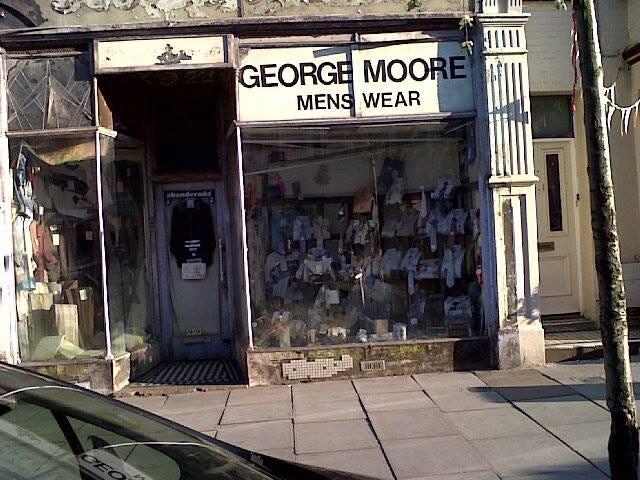
The shop window was an homage to Terylene. For me this prompted reflection on Alfred Sohn-Rethel’s insights on the “real abstraction” of commodity production:
“…in the market-place and in shop windows, things stand still... A commodity marked out at a definite price, for instance, is looked upon as being frozen to absolute immutability... time is emptied of the material realities that form its contents in the sphere of use.” Intellectual and Manual Labour: A Critique of Epistemology
As in…
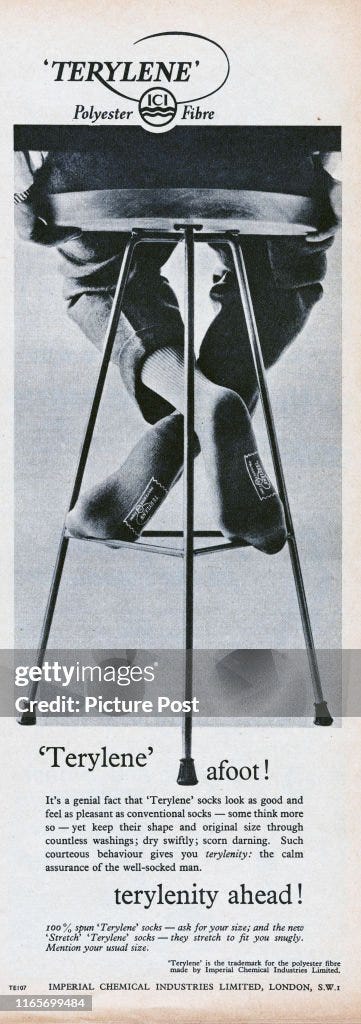
But look at it thirty years later…
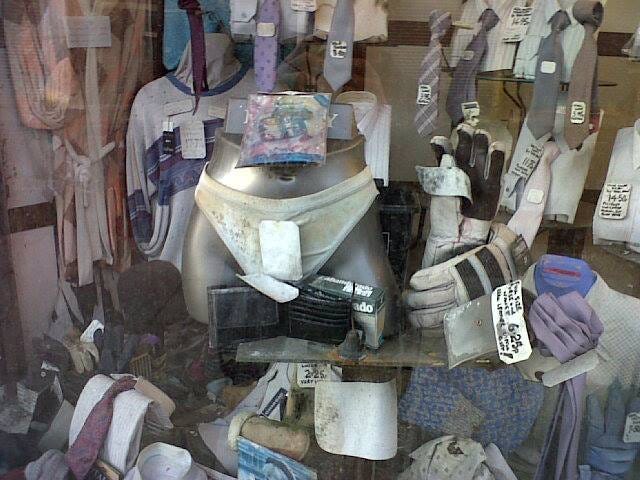
(A Google of “Terylene” indicates “several disadvantages, including poor moisture absorbency, susceptibility to static electricity, sensitivity to heat, non-biodegradability, and limited breathability. These factors can impact comfort and environmental sustainability.”)
As Mr Moore was a popular local character the state of his shopfront was tolerated by other shopkeepers. Gentrifiers, however, saw it as an affront to modernity and a woeful representation of Myddleton Road’s reputation as a “ghost street.” Exorcism was called for.
When, around 2012, Mr Moore passed on, the shop was sold, and after much wrangling between community activists and developers has become a privately-owned community space hosting “a range of activities, classes, workshops, meetings and events… at competitive rates.”
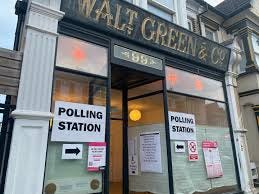
And in a gesture towards Myddleton Road’s Edwardian heritage origins, the renovated shop has been renamed - as it was in the early 20th century - “Walt Green & Co”.
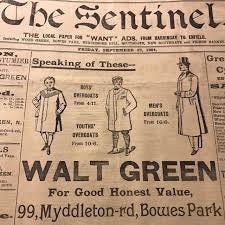
A hundred years ago Bowes Park residents used to do all their Saturday shopping on Myddleton Road rather than Tesco’s or online Ocado. Surprisingly, in 2016 Myddleton Road received the London “High Street of the Year” award despite having lost its shops. Efforts to preserve its newly acquired Hub status have been have been kept up by the local community association, who with the support of the (Labour) council and the Thames Water landowners, have established green community spaces down by the river.
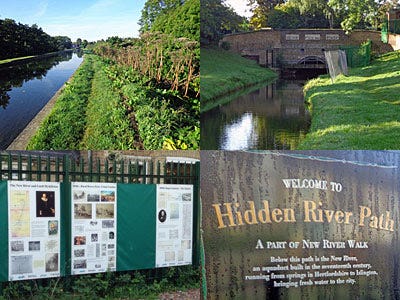
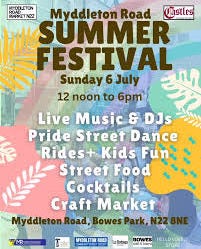
A street market operates every first Sunday of the month, selling food, bric-à-brac, and such worthy items of garden mini-huts for hedgehogs (almost extinct thanks to the urban foxes). And the Summer Festival is coming up. Enjoy!
THE BARBARISM OF PURE CULTURE - Books, etc. Website